We present a complete and comforting Winter Minestrone Soup, designed to celebrate vegetables that reach their peak during the colder months. This soup is not a lighter seasonal afterthought; it is a robust, deeply flavored, and satisfying dish that stands confidently as a main course. Built on slow-simmered beans, winter roots, leafy greens, and fragrant herbs, this version delivers warmth, nourishment, and balance in every bowl.
The Essence of Winter Cooking in One Bowl
Winter cooking demands substance and depth. Our Winter Minestrone Soup answers that need with a carefully layered approach that extracts maximum flavor from simple ingredients. The focus remains on vegetables that thrive in cold weather, allowing natural sweetness, earthiness, and texture to shine. The result is a soup that feels indulgent while remaining wholesome and nourishing.
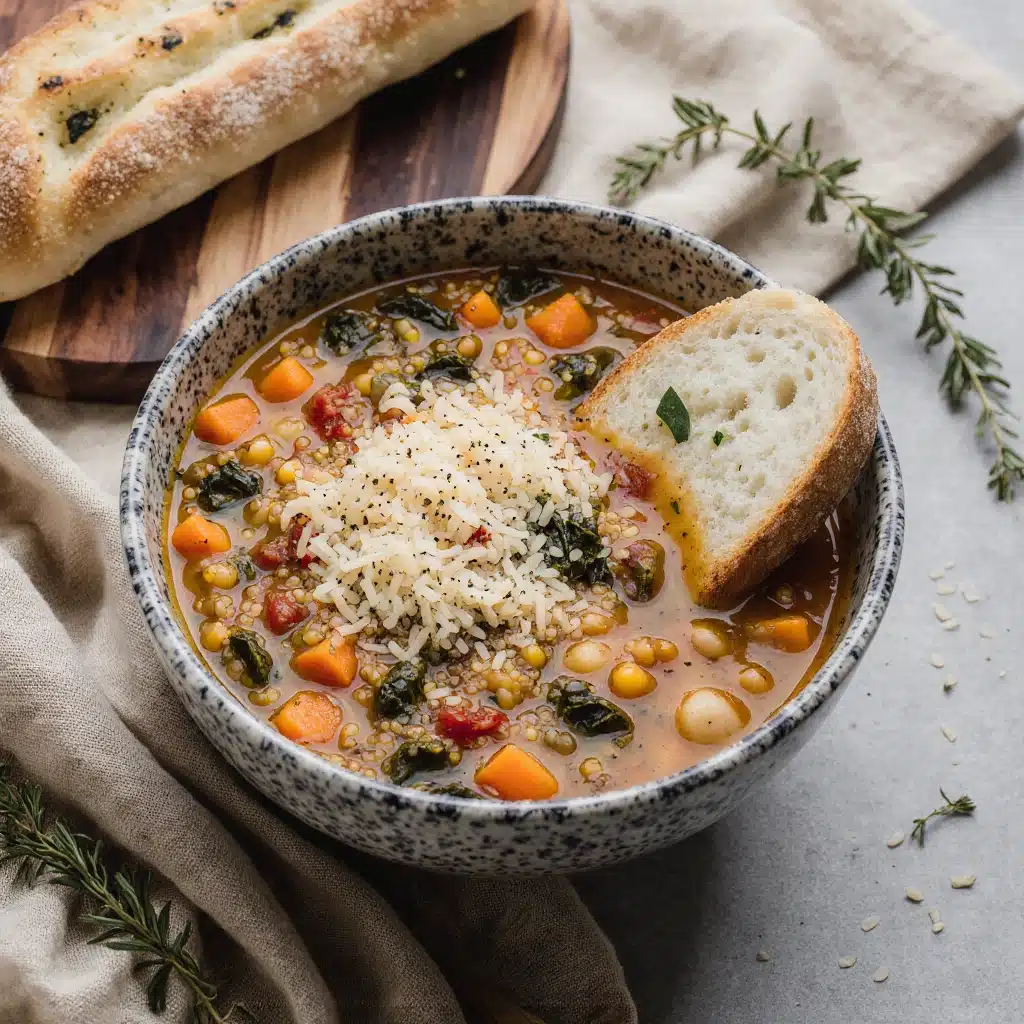
Winter Minestrone Soup: A Hearty Seasonal Classic Reimagined

Winter Minestrone Soup is a hearty, comforting soup made with winter vegetables, beans, quinoa, and fresh herbs. It is nourishing, flavorful, and perfect for cold days when you want a wholesome, satisfying meal.
- Prep Time: 20 minutes
- Cook Time: 40 minutes
- Total Time: 1 hour
- Yield: 4 servings
- Category: Soup
- Method: Simmering
- Cuisine: Italian
- Diet: Vegetarian
Ingredients
1½ cups cooked cannellini or butter beans, rinsed and drained
2 tablespoons extra virgin olive oil
2 medium carrots, peeled and diced
1 cup celery, diced
1 cup red onion, diced
3–4 cloves garlic, minced
2 bay leaves
2 teaspoons fresh thyme leaves
8 cups vegetable or chicken stock or water
1 cup celeriac, cubed
1 medium sweet potato, diced
1 (14½-ounce) can diced tomatoes with juice
½ cup uncooked quinoa
Sea salt and freshly ground black pepper, to taste
2 cups chopped fresh kale, ribs removed
3 tablespoons finely chopped fresh basil
2 ounces Parmesan cheese, grated (optional)
Instructions
1. If using dried beans, soak overnight, then simmer in fresh water with aromatics until tender. Drain and reserve cooking liquid. Skip this step if using canned beans.
2. Heat olive oil in a skillet over medium heat. Add carrots, celery, red onion, garlic, bay leaves, and thyme. Cook for about 8 minutes until softened and fragrant.
3. Transfer the sautéed vegetables to a large pot with the cooked beans and their cooking liquid or stock.
4. Add celeriac, sweet potato, diced tomatoes, and quinoa. Bring to a boil, then reduce to a simmer and cook for about 20 minutes.
5. Remove bay leaves and season with salt and pepper to taste.
6. Add chopped kale and cook for 5–8 minutes until wilted. Add more liquid if the soup is too thick.
7. Stir in fresh basil just before serving.
8. Serve hot, topped with grated Parmesan cheese if desired.
Notes
This soup tastes even better the next day as the flavors develop.
Store leftovers in the refrigerator for up to 5 days or freeze for up to 3 months.
For a vegan version, omit the Parmesan cheese.
You can substitute other winter vegetables depending on availability.
Cannellini and Butter Beans as the Structural Base
Beans form the backbone of this soup. Cannellini or butter beans provide a creamy interior and gentle flavor that absorbs aromatics beautifully. When cooked slowly, they release starch into the broth, naturally thickening it and creating a luxurious mouthfeel without the need for cream or artificial thickeners. Their high protein and fiber content also make the soup filling and nutritionally balanced.
Building Flavor with Aromatic Vegetables
A carefully prepared aromatic base transforms this soup from ordinary to exceptional. Diced carrots, celery, and red onion are gently sautéed in extra virgin olive oil until softened and fragrant. This step develops sweetness and depth that permeates the entire pot. Minced garlic, bay leaves, and fresh thyme are added at the right moment to infuse warmth and herbal complexity without bitterness.
Winter Root Vegetables for Depth and Texture
Celeriac and sweet potato play a crucial role in defining this winter variation. Celeriac contributes an earthy, slightly nutty character that enhances the soup’s savory profile. Sweet potato adds gentle sweetness and body, balancing acidity from tomatoes and complementing the beans. These vegetables maintain their structure during simmering, ensuring a satisfying bite.
Tomatoes for Balance and Brightness
Diced tomatoes with their juice introduce acidity and brightness that lift the heavier winter vegetables. They unify the flavors, prevent the soup from tasting flat, and add subtle sweetness that develops as the soup simmers. Tomatoes also contribute color, enhancing the visual appeal of the final dish.
Quinoa as a Modern and Nutritious Addition
Instead of pasta, we incorporate quinoa directly into the soup. This choice enhances nutritional value while maintaining a clean, light finish. Quinoa absorbs the surrounding flavors as it cooks, adding texture and subtle nuttiness. Its complete protein profile complements the beans, creating a soup that satisfies without feeling heavy.
The Importance of High-Quality Stock or Bean Cooking Liquid
The liquid used in Winter Minestrone Soup determines much of its character. Using the bean cooking liquid preserves flavor and nutrients, creating a cohesive base that binds the ingredients together. Alternatively, a well-made vegetable or chicken stock provides depth and structure. Water may be used when necessary, but seasoning must be adjusted carefully to maintain richness.
Layered Cooking for Maximum Flavor Development
This soup succeeds because ingredients are added in thoughtful stages. Aromatics are sautéed first, beans and roots are simmered next, and delicate greens and herbs are introduced last. This method ensures that each component retains its identity while contributing to a harmonious whole. Overcooking is avoided, preserving both texture and nutritional value.
Kale for Freshness and Nutritional Power
Fresh kale is added near the end of cooking to maintain its vibrant color and slight bite. Removing thick ribs ensures tenderness and even cooking. Kale provides contrast to the creamy beans and soft roots, while delivering essential vitamins and minerals that support overall wellness during winter months.
Fresh Herbs and Final Seasoning
Chopped basil stirred in just before serving adds brightness and aromatic lift. This final touch prevents the soup from feeling heavy and introduces a fresh note that balances the deeper flavors. Sea salt and freshly ground pepper are adjusted carefully to enhance, not overpower, the vegetables.
Parmesan as a Finishing Element
A modest sprinkle of finely grated Parmesan elevates the soup with savory richness and umami depth. It melts gently into the hot broth, rounding out flavors and adding complexity. For plant-based variations, the soup remains complete and satisfying without cheese, thanks to its layered construction.
Texture, Aroma, and Visual Appeal
Winter Minestrone Soup should be thick yet fluid, aromatic without being overwhelming, and visually inviting. The contrast of orange carrots, pale beans, green kale, and red tomatoes creates a vibrant presentation. Steam carries the scent of herbs and vegetables, preparing the palate before the first spoonful.
Serving Suggestions for a Complete Meal
This soup pairs beautifully with crusty bread, toasted sourdough, or whole-grain rolls. A drizzle of extra virgin olive oil or a pinch of freshly cracked pepper enhances the experience. Served on its own or alongside a simple salad, it functions as a complete and satisfying winter meal.
Storage, Reheating, and Make-Ahead Benefits
Winter Minestrone Soup improves with time. As it rests, flavors deepen and textures become more cohesive. It stores well in the refrigerator for several days and freezes successfully for future meals. When reheating, a small addition of water or stock restores ideal consistency.
Nutritional Value and Seasonal Benefits
Each serving delivers balanced nutrition with moderate calories, ample protein, complex carbohydrates, and healthy fats. The combination of beans, vegetables, and quinoa supports sustained energy, digestive health, and immune function. High levels of vitamins A and C make this soup especially suitable during colder seasons.
Why This Winter Minestrone Soup Stands Apart
This recipe emphasizes intentional technique, seasonal intelligence, and ingredient respect. Every step serves a purpose, resulting in a soup that feels complete and refined. It is not merely filling but deeply satisfying, offering comfort without compromise.
A Reliable Winter Staple Worth Repeating
We consider this Winter Minestrone Soup a cornerstone of cold-weather cooking. It adapts easily, rewards patience, and delivers consistent results. With its balance of flavor, nutrition, and comfort, it earns its place as a winter favorite that returns to the table year after year.